Fixed Profile Journal Bearings

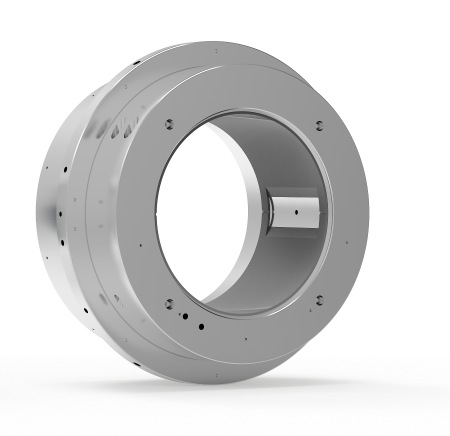
Kingsbury’s Fixed Profile Journal Bearings provide reliable radial stability for standard-speed rotating equipment.
Fixed Profile Journal Bearings Overview
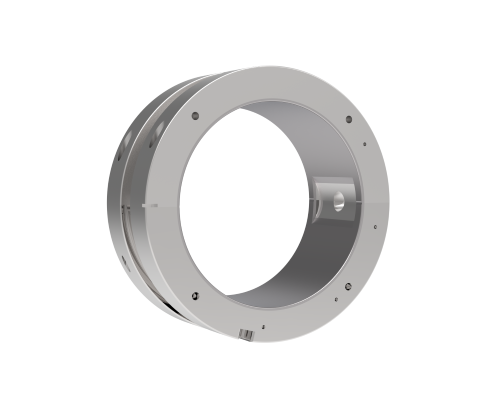
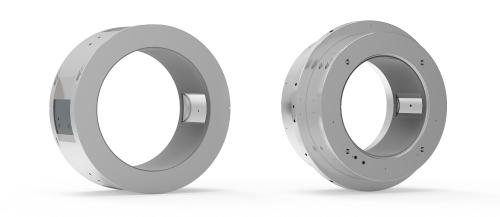
Kingsbury Fixed Profile Journal Bearings are engineered to support radial loads in oil-lubricated rotating machinery while offering a streamlined, versatile option for applications where a tilting pad design may not be necessary. Designed as part of the KN-series standard line, these bearings feature a thick-walled metric construction, are babbitt-lined over steel backing and accommodate sliding speeds from approximately 5 m/s to 90 m/s on shaft diameters from 25 mm to 700 mm (with customization available beyond that range).
What makes the Kingsbury version stand out is our long-standing heritage in hydrodynamic bearing design, combined with our ability to supply standard sizes for efficiency as well as custom configurations for unique shaft systems. Many OEMs and maintenance teams have chosen our Fixed Profile Journal Bearings when the machine load, speed and cost profile favour a plain journal style and when the hydrodynamic oil film can be reliably maintained under clearly defined operating conditions.
Performance Highlights
Each Kingsbury Fixed Profile Journal Bearing provides:
-
Babbitt-lined steel-backed construction (typically ASTM B23 Grade 2 as standard) which affords robust wear resistance and film support.
-
A selection of standard bore and wall-thickness combinations, making sizing and delivery quicker while still allowing customization for non-standard dimensions.
-
Sliding-speed capability up to about 90 m/s and shaft diameters up to 700 mm out-of-the-box, with extensions available when needed.
-
Ask about our polymer linings and other non-metallic alternatives to handle atypical lubrication media (for example water-lubricated systems or harsh environments).
-
Efficient operation in moderate‐load, moderate‐speed applications, offering a cost-advantage compared to more elaborate bearing types where high loads or speeds would demand tilting pad designs.
Why Choose Kingsbury?
Kingsbury Fixed Profile Journal Bearings are engineered for reliability and precision in standard-speed rotating machinery. Each bearing is designed to ISO standards and analyzed using full hydrodynamic film modeling to ensure proper oil flow, clearance, and stability. Our standard design library supports quick turnaround for common shaft sizes, while custom options allow fine-tuning for unique operating conditions. With more than a century of experience, Kingsbury provides expert guidance from design through installation and service, giving you dependable performance and long-term support for every application.
Fixed Profile Journal Bearings
Lubrication Requirements
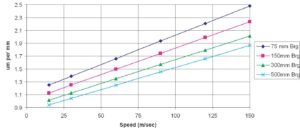
Fixed profile journal bearings require a continuous supply of high-quality lubricating oil. For most applications, we recommend ISO VG 32, 46, or 68 oil without EP additives, supplied at 45°C to 55°C and filtered to 25 microns or better. The oil both lubricates the bearing and removes heat generated within the oil film. Oil flow rate for plain bearings is a function of speed, load, clearance, and viscosity.
Inlet pressure to the bearing has little effect on flow rate and only needs to be 0.25 bar, although higher pressures are acceptable. To increase flow rate and reduce bearing temperatures, the bore profile should be modified. Kingsbury’s state-of-the-art computer calculation models can accurately predict performance for any of the bore profiles listed in the referenced table.
Clearances
The clearance between the bearing and the shaft is a critical parameter for reliable performance and expected operation. Clearance must be sufficient to allow for thermal expansion and to support the hydrodynamic oil film. In general, tighter clearances promote stability, while looser clearances result in lower oil film temperatures. The bearing designer must often balance these competing effects.
Diameter and Length
Shaft diameter is usually determined by machine torque or stability requirements. We recommend an H6 shaft tolerance with a surface finish of Ra 0.4 µm. Bearing load capacity varies with bearing length, and three standard length-to-diameter ratios are commonly used. Other ratios can be supplied to optimize performance.
As an initial guideline, radial load divided by projected area should not exceed 3.8 MPa. Designs should remain below this limit.
Installation and Tolerances
Proper installation is critical to optimal performance. Bearing housing bores should be machined to an H7 tolerance. To ensure proper fit, bearings are supplied with zero or slight positive clearance. Free spread varies with shaft diameter and bearing wall thickness.
KN bearings are supplied with an anti-rotation and alignment dowel pin to ensure proper positioning within the housing. The pin should be located in a milled slot at the joint line to simplify assembly. In most cases, the bearing must be oriented so the load angle is 90° ± 30° to the bearing split line. Three-lobe and four-lobe bearings should be carefully reviewed to confirm correct orientation relative to the load vector.
Bearing Temperature and Measurement
Most fixed profile journal bearing problems and failures are indicated by elevated oil film temperatures. During normal operation, heat is generated by the work performed within the supporting oil film. This temperature can be predicted using Kingsbury’s computer calculation models.
By measuring the bearing surface temperature close to the oil film, operating condition can be assessed. If normal temperatures are exceeded, the machine can be shut down before damage occurs.
Kingsbury recommends installing the temperature sensor along the load angle or 10° to 20° downstream of the load angle toward the trailing edge. Maximum design operating temperature should be 115°C or less depending on operating conditions. Alarm settings should be 8°C above normal or expected values, with trip settings 7°C above the alarm. Under no circumstances should the maximum trip temperature exceed 130°C.
Bore Profiles and Dynamic Characteristics
Special bore profiles are available to improve stability in high-speed, low-load applications and to reduce bearing temperatures. Table 1 in the referenced PDF compares the advantages and disadvantages of available bore profiles.
In most cases, selection involves a tradeoff between cost and performance. Understanding how bearing characteristics affect system stability is critical to this decision. Kingsbury can provide stiffness and damping values for any bore profile based on the specific application.
Applications
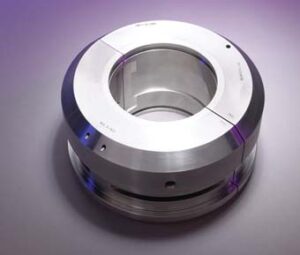
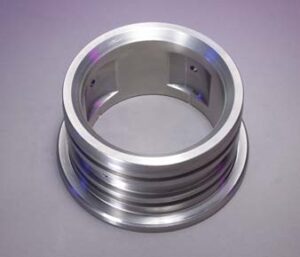
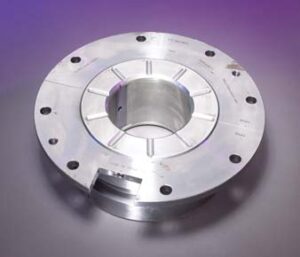
Fixed profile plain journal bearings are a practical choice for rotating equipment where loads are moderate, speeds are controlled, and long-term reliability matters more than complexity. Their simple geometry and proven hydrodynamic performance make them well suited for machines that run continuously and need predictable behavior.
Common applications include:
Steam, gas, and hydro turbines
Used in auxiliary and main shaft support locations where operating conditions are steady and bearing loads fall within established limits.
Centrifugal and axial pumps
Ideal for process, cooling water, and circulation pumps operating at moderate speeds with consistent radial loading.
Electric motors and generators
Applied in larger machines where oil lubrication is already present and durability over long service intervals is required.
Compressors and blowers
Suitable for applications with stable operating points and where a fixed bore profile provides sufficient stiffness and load capacity.
Industrial gearboxes
Used on input or intermediate shafts where alignment is controlled and operating speeds remain within the bearing’s design range.
General rotating machinery
A reliable option for custom or legacy equipment where simplicity, availability, and ease of replacement are priorities.
Fixed profile bearings are often selected as a cost-effective alternative to more complex bearing designs when operating conditions allow. For higher loads, higher speeds, or applications requiring added dynamic stability, modified bore profiles or tilting pad designs may be more appropriate.
 A detailed engineering guide covering LEG Bearing design principles, lubrication strategies, sizing considerations, and performance characteristics for high‑load thrust and journal bearing applications.Read more