
Fixed Profile Thrust Bearings

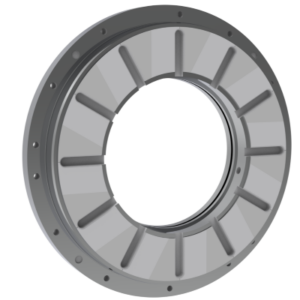
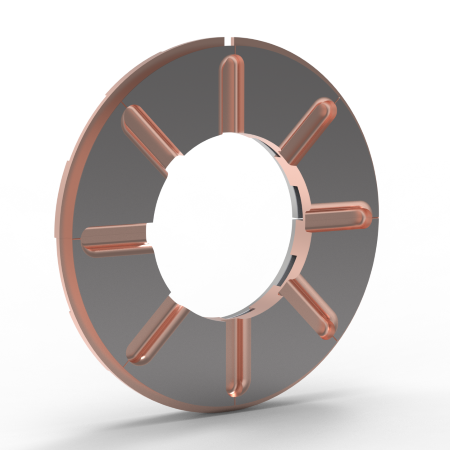
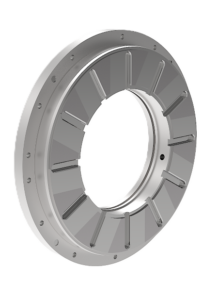
Kingsbury’s Hydrodynamic Fixed Profile Thrust Bearings are well suited for less demanding applications.
Reliable performance for moderate-speed, moderate-load machinery
Kingsbury’s Fixed Profile Thrust Bearings are a proven solution for machinery operating in steady, less demanding conditions. Designed for efficiency and long service life, these hydrodynamic bearings, also known as plain or land bearings, provide stable performance where speed and load requirements are moderate.
Each bearing is built to the same standards of precision and reliability that define every Kingsbury product. Available in a range of metric sizes up to 710 mm and customizable beyond that, these bearings are an excellent fit for turbines, pumps, gear systems, and other oil-lubricated rotating equipment.
How They Work
A continuous film of lubricating oil separates the rotating and stationary surfaces, supporting the thrust load and minimizing wear. The fixed profile design maintains a consistent geometry, simplifying installation and reducing maintenance needs. Kingsbury engineers use advanced modeling tools to calculate oil film behavior, temperature distribution, and load capacity—ensuring each bearing performs as predicted.
Performance Highlights
Measurable Results
- Handles thrust loads up to approximately 0.50 MPa × active thrust area
- Supports operating speeds between 5 and 90 m/s
- Maintains reliable performance under continuous oil lubrication
- Operates with oil temperatures up to 115°C (design limit)
- Standard ISO-compliant design tolerances for precision and interchangeability
Operational Advantages
- Cost-efficient, durable design for steady-load applications
- Customizable sizes and configurations to match shaft geometry
- Optional polymer linings for enhanced wear resistance or water lubrication
- Available in standard babbitt-lined, steel-backed construction (ASTM B23 Grade 2)
- Simplified installation and alignment using anti-rotation dowel pins
Technical Options
Configurations and Materials
Standard KN series bearings feature thick-walled steel backs with babbitt linings. For specialized conditions, Kingsbury offers alternate materials and wall thicknesses to optimize thermal performance or reduce mass. Custom designs are available for shaft sizes greater than 710 mm or when supplied drawings must be matched exactly.
Design Flexibility
Kingsbury engineers tailor clearance, bore geometry, and housing fits to each application. Oil viscosity, flow rate, and clearance values are determined based on load, speed, and stability requirements. Using in-house modeling tools, Kingsbury can predict film thickness, temperature rise, and dynamic stiffness to verify reliable operation before installation.
Why Choose Kingsbury?
Trusted Engineering Leadership
For over a century, Kingsbury has set the global standard in hydrodynamic bearing technology. Our engineers apply the same design rigor to fixed profile bearings as they do to advanced tilting pad systems, ensuring performance, consistency, and proven reliability in the field.
Comprehensive Support
From consultation through installation, Kingsbury provides engineering guidance, application analysis, and predictive modeling to ensure optimal bearing performance. Whether designing new systems or replacing legacy components, our team ensures your equipment runs as efficiently as possible.
Fixed Profile Thrust
Lubrication Requirements
Fixed Profile Thrust Bearings
These bearings require a continuous supply of high-quality lubricating oil. For most applications, Kingsbury recommends ISO VG 32, 46, or 68 oil without EP additives, supplied at 45°C to 55°C and filtered to 25 microns or better. The oil both lubricates the bearing and removes heat generated within the oil film.
Oil flow rate is a function of speed, load, clearance, and viscosity. Inlet pressure has little effect on flow rate and only needs to be 0.25 bar, although higher pressures are acceptable. To increase oil flow and reduce bearing temperatures, the bore profile can be modified. Kingsbury’s computer calculation models can accurately predict performance for each profile listed in the reference table in the PDF.
Clearances
Clearance between the bearing and the shaft is a critical parameter for reliable operation. Clearance must be sufficient to allow for thermal expansion and to maintain a stable hydrodynamic oil film.
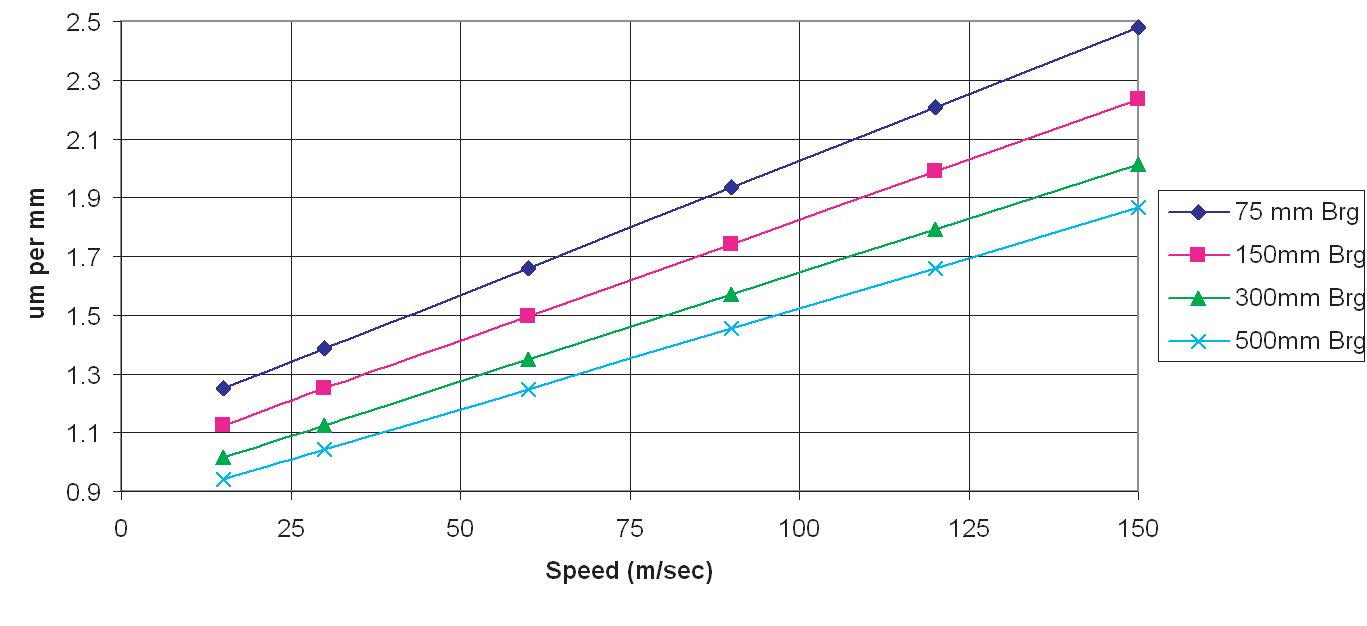
In general, tighter clearances promote stability, while looser clearances result in lower oil film temperatures. Bearing design often requires balancing these competing factors. Figure 1 shows Kingsbury’s recommended minimum clearance.
Maximum clearance is determined by adding the bearing bore tolerance, typically H7, to the shaft tolerance, H6. Shaft size is calculated by subtracting the minimum clearance from the nominal bearing diameter.
Example
150 mm bearing operating at 75 m/sec
Minimum clearance = 1.6 μm × 150 = 0.24 mm (see Figure 1)
Shaft diameter: 150 − 0.24 = 149.76 mm, H6
Bearing bore: 150 mm, H7
Diameter and Length
Shaft diameter is usually dictated by machine torque or stability requirements. Kingsbury recommends an H6 shaft tolerance with a surface finish of Ra 0.4 μm.
Load capacity varies with bearing length. Three standard length-to-diameter ratios are available, and additional ratios can be supplied to optimize performance. As an initial guideline, radial load divided by projected area should not exceed 3.8 MPa. Designs should target values below this limit.
Installation and Tolerances
Proper installation is essential for optimal bearing performance. Bearing housing bores should be machined to an H7 tolerance. Bearings are supplied with zero or slight positive free spread to ensure correct installation. Free spread varies with shaft diameter and bearing wall thickness.
KN bearings include an anti-rotation and alignment dowel pin to ensure accurate positioning within the housing. The pin should be installed in a milled slot at the joint line to simplify assembly. Bearings must be oriented so the load angle is 90° ± 30° relative to the bearing split line in most applications. Three-lobe and four-lobe bearings require careful review to confirm proper orientation relative to the load vector.
Bearing Temperature and Measurement
Bearing problems and failures are most often indicated by elevated oil film temperatures. Normal operation generates heat due to work performed by the supporting oil film. This temperature can be predicted using Kingsbury’s computer calculation models.
By measuring the bearing surface temperature close to the oil film, operating conditions can be accurately assessed. If temperatures exceed normal limits, the machine should be shut down to prevent failure.
Kingsbury recommends installing the temperature sensor along the load angle or 10° to 20° downstream toward the trailing edge. Maximum design operating temperature should not exceed 115°C. Alarm settings should be 8°C above normal operating temperature, with trip settings 7°C above the alarm. Maximum trip temperature should never exceed 130°C.
Bore Profiles and Dynamic Characteristics
Special bore profiles are available to improve stability in high-speed, low-load applications and to reduce bearing temperatures. Table 1 in the reference PDF compares the advantages and disadvantages of each available profile.
Selection typically involves balancing cost and performance. Understanding how bearing characteristics affect overall system stability is essential. Kingsbury can provide stiffness and damping values for any bearing profile based on your specific application.
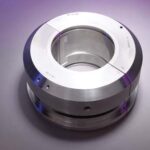
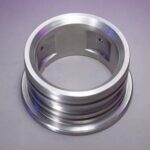
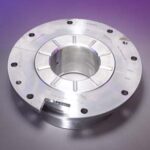
Fixed Profile Thrust Bearing Applications
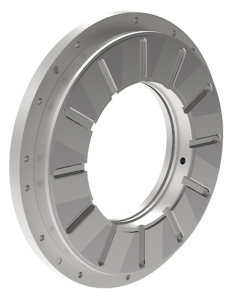
Kingsbury fixed profile thrust bearings are used in rotating equipment where axial load support must be reliable, predictable, and cost‑effective. These bearings use a machined thrust face to generate a hydrodynamic oil film that carries load, controls temperature, and minimizes wear during continuous operation.
Fixed profile thrust bearings are well suited for applications with steady operating conditions, moderate speeds, and defined load directions.
Pumps
Commonly applied in centrifugal and process pumps where consistent axial loading and long service life are required. Fixed profile designs offer dependable performance with straightforward installation and maintenance.
Compressors
Used in compressors operating at moderate speeds where thrust loads are known and stable. Fixed profile thrust bearings provide reliable axial support without the complexity of pivoted shoe designs.
Steam and Gas Turbines
Applied in selected turbine applications where operating conditions allow for a fixed geometry thrust solution. These bearings support axial loads while maintaining thermal stability under continuous operation.
Gearboxes
Used in gearboxes to manage axial forces generated by helical gears. Fixed profile thrust bearings provide a compact, durable solution where load direction and magnitude are well defined.
Industrial Process Machinery
Found in a wide range of industrial equipment where thrust loads must be controlled over long operating periods, including fans, blowers, and other process machinery.
Marine and Auxiliary Equipment
Applied in auxiliary marine systems where operating conditions are steady and bearing simplicity is preferred.
For applications with higher speeds, variable loads, or tighter stability requirements, Kingsbury also offers tilting pad thrust bearings and custom-engineered thrust solutions.
Not sure if a fixed profile thrust bearing is right for your application? Contact Kingsbury for engineering support or explore related thrust bearing designs.
A General Guide to the Principles, Operation and Troubleshooting of Hydrodynamic Bearings
A foundational reference covering hydrodynamic thrust and journal bearing principles, useful context for understanding load support and lubrication behavior in vertical machinery.
Fluid Film Thrust Bearing Comparison Study
We tested three fluid film thrust bearing designs flooded, leading-edge groove, and between-pad groove by increasing load at various speeds until temperature limits were reached. Read more about the test program, bearing designs evaluated, and modeling methods.